Thursday, July 21, 2011

No Need To ‘See, Touch and Feel’ OTEC Generation

Lt. Governor Brian Schatz visited Molokai recently and met with The Molokai Dispatch on a number of issues, including the proposed Big Wind energy project. After acknowledging that disagreements can arise over efforts to reduce the state’s dependence on imported fuel, he said this:

“When you think about it, we’re at 90 percent fossil fuel, and in order to move from 90 percent imported fossil fuel to clean energy we’re going to actually have to see, touch and feel the generation of energy. There’s no magic wand we can wave where we get clean energy without seeing, touching or feeling it, or paying for it….”

True, there’s no magic wand, but there is indeed one renewable energy technology just waiting to be developed in the islands that residents wouldn’t see, wouldn’t touch and wouldn’t feel – ocean thermal energy conversion.
OTEC plants would be stationed miles from shore, and depending on their hardware configuration, their profiles might be no more visible than a passing Young Brothers barge on the horizon, and possibly less so. Power would be sent to the islands via undersea cable, and so could abundant amounts of fresh water – again depending on which OTEC process is employed. (Makai Ocean Engineering’s OTEC website, source of this graphic, is the best we’ve yet seen for its explanation of the technology.)

The thrust of the lieutenant governor’s remarks was that fairness must be a part of renewable energy projects. When asked about community opposition that in the end might fight Big Wind on Molokai regardless of what’s fair, the lieutenant governor seemed to suggest a definition of “community” that’s larger than the island’s residents:

“I think it depends on how you define community. It’s very early in the process, and I’m confident that we can find ways to make renewable energy work and still have respect for and appreciation for the places where the energy gets generated… And so if you do these things in a way that’s fair, then you can get maybe not everyone unanimously in favor of something, but you can get some degree of consensus. And I think as long as you’re respectful and fair, that’s the right way to do things.”

We’ll have to see whether Molokai will continue its tradition of resisting projects with much less impact on the aina than Big Wind’s turbine farm presumably would impose.

This blog's hope is that Lt. Governor Schatz will become an outspoken proponent of OTEC from within the highest level of our state's government because of OTEC's vast potential to be the base-load energy resource Hawaii so desperately needs – one that virtually no one would notice, let along touch and feel.

Saturday, July 16, 2011

Editorial Gives OTEC Two Thumbs Up — At Last; Could OTEC Be Rising as ‘Big Wind’ Runs into Turbulence? UPDATE: Ku`oko`a Plan To Buy HEI Scores Big Ink

Sunday Update: Startup Ku`oko`a’s “heavy hitter” board of directors is highlighted in the Sunday Star-Advertiser’s business section. “Big Wind” rates only a minor, almost parenthetical mention in this story. Just maybe our theory (keep reading, below) about declining support for the wind energy project is seeing some proof. Join the conversation on Hawaii energy issues by signing up at the Hawaii Energy Forum (it's free) and tell us what you think about Ku`oko`a, energy efficiency/conservation programs, Big Wind and everything else about Hawaii's energy future.

Is it possible that ocean thermal energy conversion is now flowing along in the mainstream? The week began with OTEC making a splash on the Star-Advertiser’s business page. It ends with an editorial endorsing the technology as a “promising option” to help Hawaii achieve energy independence.

So what’s really going on?

Has OTEC truly gone from overshadowed and unmentioned status (see March 16, 2008 editorial in one-half of the same newspaper, the Honolulu Advertiser) to the hottest tech of the moment on its own?

Or does this hot new romance with OTEC hint at something else behind the curtain and below the surface – background radiation from a story bigger than the editorial’s content, which – let's face it – could have been written 30 years ago, and probably was?

OTEC and ‘Big Wind’

We’re thinking it does and that it has everything to do with the growing disenchantment and complications around the 400-megawatt wind energy project targeted for Molokai and Lanai.

Just yesterday the Star-Advertiser reported on a Public Utilities Commission ruling that requires Hawaiian Electric Company to go find a new partner for the Molokai segment of the project. It would appear that the whole Big Wind project is receiving the kind of scrutiny that was missing in 2007-08 when this mega-wind project swept through almost unnoticed by the general public – or so it seems in retrospect. The project prompted dueling commentaries from opponents and defenders in the past week that are linked from the renewable energy discussion Forum at Hawaii Energy’s website. (You’re invited to join the discussion there.)

News also broke in the past week of the intervener status both Maui County and Life of the Land have been granted in the Big Wind docket at the PUC.

Turning on a dime to reject one energy technology while embracing others seems to be the new rage. Both Japan and Germany have resolved to dump nuclear power, and although details are lacking, a friend in France says his country has turned against solar energy.

So that’s what we think is happening here, too. Some of the lever pullers behind the curtains have finally concluded that a $3 billion intermittent energy project isn’t even an intermediary stop on the path toward energy independence in the islands.

The new darling is OTEC, and our guess is that you’ll start seeing more evidence of OTEC’s ascendance the rest of this year. We’ll stick with that theory until something or someone convinces us we're wrong.

Monday, July 11, 2011

Memo to N.I. Residents: Oahu Power Rates Are High!

Graphic from Sunday's OTEC story in the Star-Advertiser
Here’s the deal, and we’ll see if Molokai and Lanai residents think it’s a good one: Welcome the Big Wind energy project onto your island and have your electric rates lowered to equal what Oahu residents pay.

What’s your reaction to that, neighbor islanders? Is that a good deal or just so much snake oil?

We Oahu residents already are paying the nation’s highest electricity rates by far -- with the exception of your rates, of course. It’s impossible to believe they won’t increase after a $3 billion energy project is installed that has to be paid for the only way possible – in our electricity bills!

Maybe your electricity rates will decrease from their current impossibly and laughably high levels, but that’s like being thankful for getting a splinter out of your thumb while your hand is still clamped in a vice.

The other piece of the deal, as outlined today in the Star-Advertiser by an executive of Pattern Energy, is the promise of 100-percent renewable energy dependence on Molokai and Lanai, thanks to Big Wind. Pattern’s David Parquet says it’ll happen because the computer models and studies say it’ll happen.

And if It Doesn’t?

Studies look at historical evidence and predict the future based on the past. Are we slam-dunk positive those trade winds will continue blowing for decades to come as the climate changes? That’s something to consider, because the last thing you want to see if you accept Big Wind onto your island is dozens of wind turbines, each more than 400 feet tall, sitting there doing nothing in breezes too weak to turn their blades.

No matter what is offered by Big Wind promoters, it has to be measured against cost and environmental impact, not only for our generation but for your children and their children. It has always seemed beyond sketchy to us to put all our treasure and hopes into one intermittent wind project, especially when it requires undersea cables to fulfill its promise.

Ask any supporter of ocean thermal energy conversion (OTEC) how far the technology would advance with an investment of $3 billion, and we’re pretty sure you’d hear “all the way to commercialization on a level with what Big Wind would produce.”

With $3 billion backing OTEC, we’d be tapping into the world’s greatest and inexhaustible solar energy collector – the tropical ocean that surrounds our state – and it wouldn’t be intermittent power, like wind. It would be base-load power – running 24 hours a day, every day, taken from an ocean that scientists predict will be even warmer with climate change. (For OTEC, warmer surface water is good.)

That amount spent on Big Wind would preempt OTEC’s rollout on a similar scale, wouldn’t it? Only so much money can be squeezed out of the ratepayer – or so it would seem.

But you be sure to think about it, neighbor island friends. Imagine...spending only what Oahu residents pay for electricity.... Could Paradise ever be as sweet?

Sunday, July 10, 2011

Media Finally Giving OTEC the Prominence It Deserves

“The tropical ocean is the world’s largest solar collector and storage ‘battery’ -- so big that small thinking apparently can’t detect it.”

That quote is from the third post here at Hawaii Energy Options -- our reaction on March 16, 2008 to a Honolulu Advertiser editorial that omitted ocean thermal energy conversion (OTEC) from a list of “the Islands’ reservoir of power.”

OTEC was usually missing three years ago when reporters and editors wrote about Hawaii’s renewable energy options. That’s why this blog's first entry said:

“It's past time for lawmakers to look beyond the obvious and get serious about how to exploit the solar energy trapped in ocean waters surrounding Hawaii. Using existing technology, OTEC can extract that energy and create enough electricity to power tens or hundreds of thousands of island homes, as well as commerce and industry.”

What a difference three more years of near-total dependence on fossil fuel and billions of dollars sent out of state can make. Today’s Star-Advertiser puts OTEC on page one of its Money Section in the print edition – big headline, huge photo, half an inside page devoted to OTEC.

OTEC or Big Wind?

Even as the media were ignoring OTEC in March 2008, prominent space was given to the Big Wind project – 400 megawatts of wind energy on two neighbor islands, power shipped to Oahu’s grid via undersea cable.

Castle & Cooke responded to the mood of the moment with a commentary saying it and other Hawaii companies “are ready to proceed with projects that can help Hawaii meet its goal of generating 20 percent of our energy fro renewable resources by 2020.” C&C proposed a 300-400 MW wind farm – just the ticket to put all that unused Lanai land to use and offset the financial losses of the island’s two upscale resorts.

“We cannot afford to waste another year talking about the problems we face,” wrote Harry Saunders, president of Castle & Cooke Hawaii. “We know what they are and how to solve them. What we need is for government to facilitate private investment in renewable technologies and remove the roadblocks standing in the way of a secure and sustainable future.”

Hawaii’s government has gone “all in” on Big Wind since that March 2008 weekend, when oil traded around $111 per barrel on Friday. We can only speculate where government’s emphasis would have gone if commentaries and editorials back then had been pushing hard for base-load, low-impact OTEC instead of intermittent, high-impact wind. (The price quote for Brent crude two days ago was $118.20.)

OTEC's emerging prominence and the public's new awareness of its potential may be what's needed to pull Hawaii's energy planners back from their "all in" gamble on Big Wind -- a technology at once overwhelmingly unpopular with neighbor islanders and insufficient to meet Oahu's long-term energy needs.

With support comparable to what government has given Big Wind, a Big Ocean project using OTEC technology could be launched this decade and eventually meet our needs for generations to come. The time is ripe for the state to shift its focus from the neighbor island wind energy project and start focusing on the limitless and constant source of energy that surrounds us.

Friday, July 8, 2011

Big Wind Public Info Process Shows Signs of Cracking

“You have to go through this process of noise, where you let people feel that they had a platform to speak. But you can’t let the noise distract you because time is a nemesis….” ~ Michael Cyrus, a managing partner at SteelRiver Infrastructure Partners, as quoted by Pacific Business News.

“…if they’re asking Hawaiian Electric (not to) say yes to anything because some people don’t like it, we can’t do that.” ~ Robbie Alm, executive vice president, Hawaiian Electric Company, as quoted by The Molokai Dispatch.

We’ll try not to read too much into those quotes. Taken one way – the way the speakers would want you to take them – they simply are evidence of the dogged determination and commitment Big Wind project supporters have to bring this wind energy project to fruition.

Taken another way, they could suggest a dismissive attitude about the public involvement process with neighbor island residents who have long complained that they feel like second-class citizens. We’d hate to see Big Wind confirm it for them.

Here’s another quote about the Big Wind public meetings, as supplied by Robin Kaye of Friends of Lanai: “Can’t we talk about something besides wind?” Governor Neal Abercrombie asked during his July 2 meeting on the island.

Maybe so, but it’s a pretty good bet that 80-percent-plus of the comments and questions the Governor will get on Lanai and Molokai any time soon will be about wind. After all, he’s the man who threatened back in April to condemn 10,000 acres on Molokai if it were necessary to move Big Wind forward.

Ocean thermal energy conversion (OTEC), the technology many of us believe is Hawaii’s best long-term hope for energy independence, continues to attract media coverage, as it does in today’s edition of Pacific Business News.

Governor Abercrombie would indeed have something else to talk about if he’d direct more of his resources toward base-load energy technologies like geothermal and OTEC and less toward intermittent wind -- especially when there's a headwind blowing at him on the neighbor islands.

Sunday, July 3, 2011

‘Kill Big Wind Project before It Kills Our Pocketbooks’

Today’s Star-Advertiser carries a commentary under the above headline (it’s slightly different in the original) by Mike Bond, energy industry veteran and Molokai resident. His piece rips the proposed wind energy project on Molokai and Lanai.

Bond calls Big Wind “an engineering and financial tsunami that will enrich its backers and leave the rest of us far worse than before.”

He follows a thread we’ve been picking away at for several months – the myth that Big Wind’s planned 400 megawatts of installed generation will satisfy a sizable chunk of Oahu’s power requirements. (See this February post and several others in March and April.) Inconsistent winds, line losses and other factors would not allow neighbor island wind farms to deliver more than a small fraction of their theoretical potential to Oahu via undersea cable.

Bond’s bases his argument against Big Wind on several factors, with the project’s financial impact taking the most heat. He writes, “In fact, no developer will even touch Big Wind unless the entire $1 billion for the undersea cable can be charged to HECO customers, raising our electricity bills by 30 percent.”

The piece should be required reading for anyone affiliated with the Big Wind project – if for no other reason than to be the basis of their response to the newspaper, which we can expect to read in a few days. Drawing out proponents would be a healthy outcome of Bond’s critical assessment of Big Wind, which on this Independence Day weekend concludes with a pitch for greater transparency and democracy through ratepayer participation:

“The governor, HECO et al. should realize that Maui, Lanai and Molokai are not colonies, nor part of the former Soviet Union. It’s time we were given the truth about Big Wind, so this ridiculous project can be quickly killed before it eats us all out of house and home.”

Friday, July 1, 2011

Pattern Energy ‘Won’t Go Forward’ if People Say No; HECO says Opposition Not Enough Reason To Stop

This sign greets visitors at Molokai's airport.
We should have learned by now to check in frequently with the neighbor island newspapers for their coverage of the proposed Big Wind energy project -- The Molokai Dispatch, for example.

It wasn’t until this morning’s report on Hawaii Public Radio by a Dispatch reporter that we heard one of the most important utterances to date about Big Wind, which would install 200 megawatts of wind generating capacity on Molokai and another 200 on Lanai. Their output would be transmitted to Oahu via undersea cables.

A June 26th story at the Dispatch’s website quoted Christian Hackett, senior developer for Pattern Energy, which wants to build the Molokai project:

“We have no doubt that if the community does not support the project after we’ve gone through the process and provided the information and answered questions thoughtfully, this project won’t go forward,” he said. “Molokai residents have a history of successfully stopping projects that they don’t believe in, and that’s gonna happen here – if we don’t get community support for the project, the project won’t go forward.”

Mr. Hackett undoubtedly is an optimist out of necessity and still has hopes of attracting the community support he needs. According to the Dispatch, however, public opinion surveys have found opposition to Big Wind above 90 percent on Molokai.

We don’t know the surveys’ questions, protocols and margins of error, so we have no way of evaluating their quality, but it wouldn’t be surprising if scientific surveys using accepted best practices in opinion polling found similar results. No survey suggesting anything but overwhelming opposition to Big Wind has been publicized to our knowledge.

Count us among the skeptics that Big Wind will ever be built – not with the widespread opposition as described in the surveys and newspaper stories.

“We Can’t Do That”

The bigger reason to question the project, though, is the intermittent nature of the energy source. As a long-time believer in ocean thermal energy conversion and its eventual role in supplying base-load abundant power to the islands, we can’t join the enthusiasm for Big Wind as expressed by some of Hawaii’s major energy players.

That includes Hawaiian Electric Company, which apparently is positioned to endorse major energy projects like Big Wind regardless of public opinion. HECO’s Robbie Alm told the Dispatch last week: “…if they’re asking Hawaiian Electric (not to) say yes to anything because some people don’t like it, we can’t do that.”

“Some people” in this case would seem to be virtually the entire population of Molokai. That’s a questionable position for any company to take – especially a public utility.

Thursday, June 30, 2011

Big Projects Panel Let’s ‘Big Wind’ Off Easy

It’s no knock on attorney Jerry Sumida to suggest that the Big Wind segment of last week’s Big Projects panel at the Plaza Club didn’t quite match the build-up. (We would have posted about the June 23 event earlier but for a getaway week in Waikoloa on the Big Island. If any place in Hawaii deserves the “Big Wind” designation, this is it.)

Careful as always to measure his words, Sumida presented the basics of the Big Wind energy project without prejudicing the issues, going only so far as to suggest “not making or delaying a decision (on the project) is actually making a decision. Either we remain stuck in our dependence on oil as we are today or we do something about it.”

Some of the pre-event publicity implied that NIMBYism might thwart plans to build 200 megawatts of wind energy generating capacity on Molokai and another 200 MW on Lanai, but Sumida didn’t go there. He instead noted that Hawaii exports about $4 billion annually to buy the oil that runs 95 percent of the state’s economy.

“What could we do with these funds if they stayed here,” he asked, saying the choice is between exercising greater independence in our energy future or not. Big Wind could contribute to achieving that independence, he said, but questions need to be asked and answered for the benefit of all stakeholders.

Biggest of the Big

The Big Projects panel sought to understand why large projects like Big Wind, the Super Ferry and Honolulu rail seem to take forever or don’t succeed at all. In that regard, former Governor Ben Cayetano dominated the event with his recitation of why he’s fighting the rail project. We wasted no time addressing his comments at our sister blog, Yes2Rail.

Sunday, June 19, 2011

“Hey, Gang! Let’s Put On a Show and Call it ‘Big Wind’”

6/20 Update: PBN story says "HEI's credit rating could complicate Big Wind."
It’s whacky, but when we read the editorial in the Star-Advertiser this morning on the Big Wind energy project, Mickey Rooney and Judy Garland popped into mind.

The connection with the young actors of the late ‘30s and early ‘40s was the over-the-top enthusiasm for Big Wind in some circles – the same kind of boundless enthusiasm oozed by Rooney and Garland on the silver screen in their “backyard musicals.” Maybe you’ve seen them on TV.

The lasting impression from those musicals was the brainstorm the actors would have about what they could do with all their singing and dancing talent. “Let’s put on a show!” one of them would shout, and then they would. It was cute, and audiences loved it for a while.

In the end, audiences cooled to the cuteness, and we’re wondering if that will be the ultimate outcome of Big Wind, the plan to build 400 megawatts of installed wind energy capacity on Molokai and Lanai and transmit it to Oahu with seafloor cables.

There’s plenty of enthusiasm for the project – from Hawaiian Electric Company, the State Energy Office, the Public Utilities Commission, wind energy producers and landowners Castle & Cooke and Molokai Ranch.

But the ranks of the skeptical and unenthusiastic are growing. Neighbor islanders appear united in near-unanimous opposition to forever turning over thousands of acres of their islands’ open space to the farms. Environmental organizations and even the County of Maui are complaining about the lack of transparency.

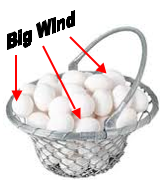
And then there’s the presumed inadequacy (from where we sit, at least) of putting Oahu’s energy eggs into one neighbor island basket and relying so heavily on the intermittency of wind power. Oahu needs base-load power, but even an optimistic assessment of Big Wind’s potential suggests that only about 160 MW would be available on average for Oahu’s grid. OTEC, anyone?

Judy Garland and Mickey Rooney never had to worry about whether their on-screen musicals would succeed. MGM had it written into the script.

Big Wind’s script is only a broad outline, however, and there’s still doubt about who some of the major players will be. Then there’s the potential for strange plot twists, such as possible State condemnation of Molokai land to bypass local opposition. And you thought Spider Man has had trouble on Broadway….

Big Wind will be part of a panel discussion on Thursday sponsored by the Hawaii Venture Capital Association and ThinkTech under the broad title, “What makes Big Projects so hard in Hawaii?The public is invited to register for the paid event.

Monday, June 13, 2011

‘Big Wind’ Starting To Look Like a ‘Big Denial’

Honolulu Star-Advertiser graphic
The “denial” of which we write is the string of denials issued by the Public Utilities Commission to parties that want a seat at the table in the formal consideration of Big Wind, the 400-megawatt neighbor island wind power project. The Friends of Lanai and Life of the Land both have received rejections of their bids to intervene in PUC dockets on the project, and now the County of Maui is asking for more Big Wind transparency.

Another “denial” might be the apparent tendency to dismiss neighbor island residents’ concerns about the impact of adding 200 or more wind turbines to their rural landscape. Some in the community are crying NIMBY and implying that not-in-my-backyard concerns are illegitimate.

The Hawaii Venture Capital Association is hosting a panel discussion on June 23 titled “Big Projects – Why Are They Stuck?” The event’s online announcement says “the program will examine some of the Big Projects we’ve been waiting for and try to find out why they haven’t been completed and what should be done.” Big Wind and the Honolulu rail project are on the agenda.

The apparent willingness to embrace Big Wind also is a denial of sorts of the promise of base load technology to address Oahu’s future electricity needs. Some see more promise in geothermal than wind energy for that purpose, whereas we continue to believe ocean thermal energy conversion is the best long-term answer.

What seems certain at this time is that Big Wind will continue to provide its share of "Who-Shot-JR” moments in Hawaii’s long-running renewable energy soap opera.

Saturday, May 28, 2011

Hawaii’s ‘Tsunami of Isolation’ Dictates Innovation

A long holiday weekend with plenty of writing time helps break the silence here at Hawaii Energy Options. Frankly, we’ve been giving the Big Wind Soap Opera a rest until the producers have settled on a permanent cast and the characters are either married off or poisoned out of the script. New plot developments might test our resolve, however.

No such writing drought has affected Pat Takahasi, the innovative thinker and chief advocate of the Blue Revolution. Pat is a staunch supporter of breakthrough energy solutions, with ocean thermal energy conversion (OTEC) at the top of the list.

One of Pat’s contributions to Huffington Post earlier this year noted that the earth’s surface is two and one-times more water than land, yet “almost never is the ocean recognized as part of the (energy) solution.”

Pat recently wrote about Japan’s energy crisis that became apparent thanks to the March tsunami and crippling of the country’s nuclear energy industry – not just one plant but the whole concept in that nation.

“Suddenly, the Great Tohoku Earthquake, Tsunami and Nuclear Disaster has thrust the Blue Revolution as the optimal solution for Japan’s future,” he wrote a week ago today at his Blue Revolution Hawaii blog.

Hawaii’s Energy ‘Tsunami’

Unlike hurricanes, earthquakes and tsunamis that cannot be ignored, Hawaii’s energy crisis has been a decades-long slice of life for island residents. Our state’s isolation requires energy lifelines thousands of miles long to meet our needs. This dependence is like a nagging discomfort in the body that one day becomes a catastrophic illness; we’re vaguely aware of the problem and maybe take an aspirin to relieve the minor pain, but we go about our business without doing much of anything to address the real problem.

The public-private push behind Big Wind strikes us as a misstep that's likely to delay real progress in addressing our energy tsunami – a head-long rush to develop an intermittent power source that can’t possibly provide the long-term energy security Hawaii requires. A comparable effort behind OTEC would make ocean energy a reality.

The Blue Revolution concept includes plans for a Pacific International Ocean Station (PIOC), an ocean version of the International Space Station. The PIOC would pioneer OTEC and other ocean-based energy and clean water applications.

Innovative thinking, like the Environmental Island concept offered by the Shimizu Corporation (at left), is all around us, yet “official” Hawaii seems oblivious to these concepts. Big Wind advocates have invested their energies in a project that would have tremendous impacts on two of our neighbor islands and do nothing to ensure base-load power delivery to our populations for generations to come.

Pat Takahashi is one of Hawaii’s authentic visionaries and deserves a place at the table in discussions of permanent energy solutions to meet Hawaii’s needs a century from now. Unfortunately, the focus now is on meeting a paper goal to achieve a percentage of renewable energy use by 2030.

Our best suggestion on Memorial Day weekend: Bookmark Pat Takahashi’s various websites and visit them often!

Friday, May 13, 2011

PUC Rejects FOL’s Petition to Intervene in ‘Big Wind’

It was more than predictable. Legal technicalities tend to outweigh the down-home emotions of individual citizens as revealed in the petition filed by the Friends of Lanai with the Public Utilities Commission seeking to intervene in the Big Wind project docket.

Rather than repeat all the “who shot JR?” twists, we’ll direct you downward in this column to previous posts on Big Wind. We’ve called it a soap opera due to all the romancing, spurning and dissing among the players.

The PUC rejected FOL’s petition (which is what Hawaiian Electric Company urged it to do) and noted that FOL isn’t a party to the docket and therefore couldn’t petition for intervention.

Where this harried project goes next is anybody’s guess. Will the Governor condemn 10,000 acres of Molokai land for Big Wind? Will First Wind find a parcel somewhere in the county to build 200 megawatts of wind power? Will all 400 MW end up on Lanai, as apparently is still possible? Will Pattern Energy and Molokai consummate their budding relationship? What next for the Friends of Lanai? Does a $3-billion investment in an intermittent wind resource make sense?

We asked Robin Kaye of the FOL group exactly that – what’s your next step? Here’s his emailed response today:

“Good questions. We're doing the necessary legal research and questioning right now. The PUC has been operating like this (opaque, no-explanations-necessary) for quite a long time. HECO and the PUC appear to move in lock-step. It's really bad government. They write the rules, they interpret the rules, and they then appear to adjudicate the rules. There doesn't seem to be much precedent for challenging the PUC re regulations; lots regarding rate cases, but very little around the issues we're raising. And it's doubtful they consider "residents' interests" at all. One would have assumed that the Consumer Advocate (we think this is an oxymoron) would take that role, but they appear to be in step with HECO and the PUC on this.”

Tuesday, May 10, 2011

Columnist: ‘Big Wind’ a Must No Matter What, Including Condemnation, ‘Bribes’ to Residents, Huge Investment

We believe energy and technology columnist Jay Fidell is on target on most subjects he covers, but his ThinkTech column in the Star-Advertiser today is not one of them.

Fidell thinks the so-called Big Wind neighbor island wind farm and inter-island cable project is so absolutely critical to Hawaii’s energy future that it simply must happen, no matter the cost and no matter how objectionable the project might be to Molokai and Lanai residents and those who agree with them.

Calling Big Wind the “keystone of our Clean Energy Initiative,” Fidell argues that Hawaii must “get over” the reluctance to initiate eminent domain proceedings.

“The governor needs to get the Big Wind parties in a room and jawbone them into a deal,” Fidell writes. “Failing that, he should do exactly what he threatened – yes, condemnation. Take heart, governor. Be impatient about clean energy – you have the power. Make eminent domain imminent. Many people will support you in this, and a condemnation will assure progress on wind and other projects. Do it once and things will be easier going forward.”

In other words, run roughshod over the legitimate concerns of neighbor islanders whose public statements on Big Wind are virtually unanimous in opposition. Is this the state of affairs we want in the Aloha State?

Benefits or Bribes?

The ThinkTech columnist says “there’s a kind of benefits package inflation going on” to – let’s face it – bribe/entice those residents into supporting Big Wind and forever changing the look, feel and nature of their islands. As Fidell notes, a 200-megawatt wind farm requires “something over 10,000 acres” as a footprint.

The benefits on the table include a 50-percent cut in electricity rates; improved water utilities, roads and fire stations; scholarships and educational programs, and preservation of native lands.

That last one is of course ironic – land preservation programs as 10,000 acres are turned over for generations to wind turbine towers taller than the First Hawaiian Bank building in downtown Honolulu.

But think about the education lessons that might flow from these enticements. What lessons would neighbor island children learn about government’s relationship with its citizens if eminent domain is exercised? What lessons would be learned about how one gets what one wants?

The best lesson for all of us from this frenzy over Big Wind would be a recognition that a solid plan has yet to be developed to deliver firm power to the citizens. These overly-involved and intricate plans to make Big Wind happen remind us of the parable of the camel and the eye of a needle. Does a good plan require this much intrigue? Wouldn’t a preferred and superior energy future for the state require far less gyrations and be obvious in its relative simplicity?

The Big Wind Basket

The most dangerous aspect of “Big Wind or Bust” is that this project could soak up $3 billion that might otherwise be invested to ensure a strong energy future for Hawaii. Wind is an intermittent power source, and the neighbor island farms would fall far short of delivering their 400 MW of installed capacity to Oahu.

The farms’ capacity factor is estimated to be between 20 and 38 percent, meaning Oahu would receive on average between 80 and about 150 MW of power -- not the aggregate 400 MW on the turbines’ nameplates.

An average output of 150 MW and less can’t possibly justify a $3 billion investment. That amount, invested in ocean thermal energy conversion, which this blog has been touting since its first post, would surely move OTEC from its current promising-but-risky phase into large-scale energy production – with NO on-land impacts.

OTEC plants floating miles off each island could provide the secure energy future for Hawaii that Big Wind can’t. So could geothermal energy from an expanded resource on the Big Island and possibly on Maui, as well. Like OTEC, geothermal would be a base load energy source.

This blog isn’t the only advocate for these energy technologies; see Kuokoa’s website for background and advocacy regarding geothermal energy. And we certainly are not the only ones who believe Big Wind’s on-land impact would be too severe to tolerate; see the Friends of Lanai website.

Betting the Future

We do have to thank Jay Fidell for painting this issue in the starkest and most alarming terms – the seizure of private land to enable the big dreams of a relatively small group of energy planners who are satisfied with betting our future on how strong the wind will blow years from now.

Are we blind to the bizarre weather shifts Hawaii has experienced this year alone? Don’t our planners believe climate change is happening, and if they do, are they so certain Hawaii’s trade winds will always be there?

Of two things we are certain: The sun will continue to shine and warm our tropical ocean, the world’s largest solar energy “battery” and OTEC engine. And Pele's geothermal power will always be with us, too.

OTEC and geothermal energy are Hawaii’s energy future. That’s where electricity customers should willing to have their dollars invested – if not for this generation's benefit, then for the benefit of all that follow.

Monday, May 9, 2011

Public TV Show Reviews Hawaii’s Energy Future

Afternoon Update: HECO urges PUC to reject Friends of Lanai petition on Big Wind bidding.
There never can be too much conversation about getting off oil in the Aloha State, so the topic on public television’s “PBS Hawaii Insights” show last week was more of what we needed.

Watch it and you can pick and choose the parts you like, the parts you don’t like and the parts that support your particular technology preference and/or your major concerns. We’ve noted here our concern about the Big Wind project, which at times has resembled a “soap opera” with its big swings in plot and players.

Our biggest concern is that a great deal of effort and faith has been invested in Big Wind by many key players, including some on this TV show, even though the entire project is highly problematic at this time. The anticipated impacts to be visited on Molokai and Lanai may be so great in the end that Big Wind simply won’t happen, and you can be sure opponents on those islands will be heard.

That’s why we wonder whether $3 billion invested in the two neighbor island wind farms and an undersea cable to connect them to Oahu would soak up so much money from Hawaii as a whole – businesses, residents, government – that there would be nrothing left for other technologies that conceivably could come online later. In that regard, we’ve picked the following quotes.

Hermina Morita, chair of the Hawaii Public Utilities Commission:

“One of the key objectives of Hawaii Clean Energy Initiative is to demonstrate with the US Department of Energy that there’s no one solution, that it will take multiple technologies, diversity and the integration of these various technologies to come to a solution, and what better place to do it than Hawaii….? There’s no one technology that’s gonna solve our problem, and we really have to approach this from a systems (basis)….”

Mike Hamnett, chair of the Hawaii Energy Policy Forum:

“There are a number of (technologies) that are right over the horizon. So in the whole biofuels area, a lot of people are looking forward to the role that algae will play…. The people who are in the algae business they’re saying it’s three years, five years away, but having the diversity of resources allows us to not put all our eggs in one basket, so if we get a new technology….even ocean thermal energy conversion has got a lot of potential….but if we take a diversified approach to the whole thing, and as these new technologies come on line we can swap them out for the things we’ve already developed and get the best of all worlds, rather than putting all of our eggs in any single technology basket.”

There’s that energy basket again, and without actually connecting his remarks to Big Wind, the HEPF chair mirrored the same concern that we have – that the Big Wind project is becoming the technology that’s far more desirable than all the others, notwithstanding the breadth of discussion about other technologies on the program.

Please watch the video, then chime in with your opinions at the Hawaii Energy Forum, which is linked at the top of the page. Click on any of the major issues listed there, such as Energy Policy to comment on the TV show, register in the upper right-hand corner (if you haven’t already) and weigh in on one of the most important conversations happening in Hawaii.

Monday, May 2, 2011

First Wind, Rejected at Every Turn, Keeps Trying

(Evening Update: Please visit our sister blog, Citizens Helping Officials Respond to Emergencies (CHORE), for our instant analysis of what was missing in communications to Oahu residents during the hours-long blackout late today.)

First Wind, the Boston-based energy company, must be wondering if it has lost its touch. After being hailed for its wind projects on Maui and a new one on Oahu’s North Shore, First Wind is getting nowhere with its bid to be a player in the Big Wind inter-island energy project.

The Public Utilities Commission has rejected First Wind’s request for an extension to secure land for a 200-megawatt wind farm either on Molokai or Maui. The company’s efforts to cut a deal with Molokai Ranch were spurned, and the ranch has turned to Pattern Energy of San Francisco for that island’s share of the project.

The PUC said First Wind didn’t have proper standing to file an extension request so it could find the land it needs. Only parties to the Commission’s docket may do so, the PUC’s denial letter said, and Hawaiian Electric Company, which is a party, refused First Wind’s request to file the extension on its behalf.

That makes three rejections for First Wind – by Molokai Ranch, the HECO and now the PUC. Unknow now is whether the PUC will add another by rejecting the company’s protest of Castle & Cooke’s assignment of 200 MW of allotted wind energy potential from Lanai to Molokai and Pattern Energy.

Soap Opera-ishness

We had to make up that word to capture the craziness that the Big Wind project has become. Also protesting the C&C “assignment” is the Friends of Lanai group, which noted last week that Pattern Energy “is not a party to any PUC Docket, nor party to any agreement with any public agency in Hawaii. Despite claims to the contrary, FOL believes HECO and C&C have no right – and no authority – to arbitrarily ‘select’ a new developer.”

One possible outcome of all this would be the PUC’s agreement with First Wind and FOL that C&C can’t just up and “assign” 200 phantom MWs to Pattern, which showed up late in the game at Molokai Ranch’s invitation.

Another possible outcome would be for all of Big Wind’s 400 MWs to be built on Lanai, an option that surely would trigger the mother of all protests by the FOL group and others.

It’s not for nothing that we’ve called this whole affair a soap opera.

Wednesday, April 27, 2011

More ‘Big Wind’ Twists; First Wind Objects to New Plan

(Update on Friends of Lanai PUC petition near end of post.)
We’ve compared the Big Wind energy project to a TV soap opera because of the twists and turns, the new relationships that supplant the old, the spurned suitors who aren’t taking the rejection well – it’s all there in some of our recent posts, starting here. And now there’s more drama.

First Wind, the energy company that has created a name for itself in the islands by building wind farms on Maui and Oahu, was to be part of the 400-megawatt wind project, but it failed to reach an agreement with Molokai Ranch to build 200 MW on that island.

The ranch turned to a new company – Pattern Energy of San Francisco – to develop the farm on its land. Castle & Cooke, which owns nearly all of Lanai, wants to build a 200-MW farm there, but because First Wind fell out of the plan, C&C believes it has the right under the original Big Wind agreement with Hawaiian Electric Company and the state to build all 400 on that island. (Consider us among the skeptics that such a huge development could ever occur there; a 200-MW farm seems problematic enough in light of Lanai residents’ opposition.)

But C&C now says it wants to assign 200 MW back to Molokai, where Pattern Energy would build a farm with Molokai Ranch’s blessing. First Wind is having none of it, as reported in Pacific Business News, which seems to be doing a more diligent job on this story than any other media outlet.

Paul Gaynor, First Wind’s CEO, has written to the Public Utilities Commission to object to the Molokai Ranch/Castle & Cooke/Pattern Energy deal, calling it a direct violation of the original agreement with HECO to connect 400 MW of installed wind energy capacity on the two neighbor islands with Oahu via undersea cable.

Subversion Claimed

Gaynor wrote that the agreement is now “being subverted, if not breached, by these most recent developments in which C&C has unilaterally claimed a right to develop the full 400 MW and further is seeking to ‘assign' 200 MW to an entirely new party its ‘development opportunity’ on another island, Molokai, with respect to which C&C has no relationship, contract or any other legal rights whatsoever.”

See what we mean about the soap-opera comparison? The only thing missing so far is a shotgun wedding, and that might just be in the script, too, if the state and utility energy planners become desperate to connect the wind farms to Oahu’s grid.

Some are supporting options to massive wind development, such as widespread solar energy distributed generation and/or base load sources like geothermal energy and ocean thermal energy conversion, which might be developed over the next decade or two and connected to Oahu. The neighbor island wind farms would be intermittent sources that on average would deliver somewhere between 25 and 38 percent of their installed capacity to Oahu.

Hawaii’s energy planners have integrated Big Wind to such an extent that supporters say failure to build it will threaten the state’s ability to meet the 2030 goals of the Hawaii Clean Energy Initiative. Others simply ask, so what, and is it all that critical to push through Big Wind in light of its attendant controversies and uncertainties?

FOL Files Petition

Meanwhile, the Friends of Lanai group filed a petition with the Public Utilities Commission yesterday to reopen the competitive bidding process for Big Wind. The FOL press release says:

"Pattern Energy is not a party to any PUC Docket, nor party to any agreement with any public agency in Hawaii. Despite claims to the contrary, FOL believes HECO and C&C have no right -- and no authority -- to arbitrarily 'select' a new developer. The entire process has been shrouded in secrecy. There has been no public discussion of costs, no responsible consideration of other means to meet the non-binding goals of the State's renewable portfolio standards, and no clarity on where the proposed undersea cable might surface on Oahu. The process hasn't even determined from which islands the wind resources would be harvested. The rush to Big Wind should stop here and now."

4/29 Update: The Star-Advertiser covers the FOL angle today.

Join the Conversation

If you have thoughts on all of this, Hawaii Energy (the state’s conservation and efficiency program administrator) has a Forum where you can express them. Just go to the Forum and register by clicking on the link in the upper right corner. Look for the Big Wind discussion within the Renewables category for now.

Sunday, April 24, 2011

Finding a Way for Solar Power To Reach Its Potential

The Star-Advertiser devoted editorial page space a couple days ago to a problem that’s holding Hawaii back from achieving greater reliance on solar energy.

Blame it on the clouds. When they pass over photovoltaic systems on rooftops, PV power output understandably drops, and that can affect the electric grid’s stability, according to Hawaiian Electric Company (HECO).

HECO requires a costly study before new PV systems can be installed on neighborhood circuits that already have at least 15 percent of their total generating capacity coming from alternative resources.

Only 4,000 of the state’s 267,000 single-family homes have PV systems, says the editorial, and that number isn’t likely to grow in neighborhoods where the 15-percent barrier has been reached. Nobody has been willing to shell out the $15,000 to $40,000 cost for one of those studies that could lead to an installation.

Eleven out of Oahu’s 465 circuits are thus stymied. The remaining 454 circuits would seem to offer plenty of expansion possibilities, but those 11 are where the money is, as evident by their PV penetration.

Sharing the Load

Finding a path for solar power expansion on circuits where economic power is concentrated and the will to invest already exists is the challenge. There has to be a way, perhaps by adding another of those small surcharges or fees we all pay in our electric bill to fund rebates for energy-efficient appliances.

The beneficiaries of the surcharges are those among us who replace inefficient refrigerators, water heaters and even light bulbs, but the entire population also benefits when we cut our kilowatthour demand and therefore our reliance on oil to generate electricity. The same would be true of a surcharge that funds those PV-connected studies.

Do the laws of physics allow an entire circuit to be PV-powered? Only in the dreams of PV system marketers, no doubt, but that could be a goal for the 21st Century – after lots of experimentation, development of storage capabilities and, yes, more studies.

Thursday, April 21, 2011

Kuokoa Promotes Its Plan for Hawaii to Get Off Oil

Kuokoa, the newly formed company (Hawaiian language advocates prefer Ku`oko`a), has a plan to accelerate Hawaii’s move to energy independence.

Eliminating oil from our daily diet not only is desired but a necessity in the short term, not just the long. Oil prices continue to rise driven by worldwide consumption (see oil clock at right) along with seen and unseen forces.

Kuokoa CEO Roald Marth has been giving presentations to groups large and small in recent months. He spoke to the Rotary Club of Honolulu on April 5th. If you have any interest in Hawaii’s energy dilemma, do yourself a favor and watch the video.

Wednesday, April 20, 2011

Nation’s Highest Gas Prices Reach Historic Territory; Hawaii Drivers Have Never Had To Pay This Much

That's the headline today at our Yes2Rail blog, where we conclude that Honolulu rail's future success is assured -- for cost reasons alone, but certainly also for convenience.

The conclusion here at Hawaii Energy Options is that new record-level prices for gasoline in Honolulu and statewide drive home the importance of reducing the state's demand for oil to generate electricity and power our transportation sector.

Please visit Yes2Rail, especially if you'll be filling up in Hawaii in the next few days.

Monday, April 18, 2011

Feedback – plus Wind Study as Recommended Reading


We did the unusual over the weekend and sent a link to Friday’s post on Big Wind to a few dozen energy-focused people in industry, academia and government. We asked for feedback if our conclusions in that post were off the mark.

And we got feedback. Dr. Luis Vega’s opinion counts for a lot, and he recommended reading the “Oahu Wind Integration Study” by Jay Griffin et al:

Simply by reading the Executive Summary you will be positively surprised at the technical viability of incorporating additional wind and PV into the Oahu grid with “state-of-the-art” modifications ( e.g., up-gradable controls to modify ramp-up speed of existing fossil fueled generators and the latest controls available for WTGs). This report forced me to “upgrade” my technical analysis (cost, political viability etc. is a different discussion) and open my mind to additional wind as well as nascent wave energy and other intermittent resources. I hope that reading the Griffin report will open up your mind to wonderful possibilities. It opened mine.

So we've started to read the report and, like Dr. Vega, recommend it to all Hawaii-based visitors to this post. From this lay person's perspective, it covers generation issues remarkably well. So far the reading suggests the Study evaluates the feasibility of adding 400 megawatts of wind power from neighbor island farms.

We'll continue reading the study to its end, but we’d make the point that feasibility isn’t what is driving our present concerns about Big Wind.  Impacts and costs are top of mind here at Hawaii Energy Options. So, too, is a “favorite” renewable energy option of ours – ocean thermal energy conversion.

OTEC is mentioned numerous times in the Study because it assumes the addition of a 25 MW OTEC plant by 2014. Here are two such entries:

“A small amount of baseload energy is provided by HPower (waste to energy), Honua (gasification) and OTEC (Ocean Thermal Energy Conversion).” And… “One of the significant changes from the present operating year to 2014 is the additional capacity of HPower and contributions from OTEC and Honua.”

As an OTEC advocate, we’d like to believe this ocean technology could conceivably be providing much more than 25 MW to Oahu’s grid by 2030, which is the target year for attaining the Hawaii Clean Energy Initiative’s goals.

Does the Study assess how much OTEC generation would be feasible if $3 billion were spent to develop 400 MW of Big Wind power and the undersea cable to transit that electricity to Oahu? Don’t know yet, because we haven’t finished reading it, but early indications are that Big OTEC isn’t analyzed.

But we are reminded of those Nature programs on public television. Some animal species will sacrifice a new hatchling or cub to ensure the viability of others. Could OTEC’s promise of abundant baseload energy be fully realized (once it’s proven in this decade) if Big Wind already is in the nest? How much money can these islands afford to feed its renewable energy projects? Would Big OTEC even be attempted if so much is spent on Big Wind/Cable?

We don’t know the answers and would hope someone as capable as Dr. Vega – who heads up the Nawaii National Marine Renewable Energy Center – and/or the Hawaii Natural Energy Institute would look into it.

Now….to finish reading the study. We encourage your feedback by adding a comment, below.

Friday, April 15, 2011

NY Times Nearly Ignores Big Wind Capacity Factor, Which Must Be Major Consideration In Project Decisions

Capacity factor comparison between energy technologies by NRELThe dot is each technology's average capacity factor; the horizontal line shows the range.
The New York Times has published a two-part series on Hawaii’s energy dilemma, yesterday and today, and it’s a pretty good summation of the Big Wind project to build 400 megawatts (MW) of installed wind energy capacity on the neighbor islands to meet energy demand on Oahu.

There are two major problems with this series from where we sit:

1) Developer Castle & Cooke didn’t respond to the Times request to be interviewed for the piece. More on that below.

2) Although the wind farms’ capacity factor is mentioned in passing in today’s story, the impression you get from the piece is that Big Wind will provide 400 MW of power for Oahu’s use. It won’t, and that’s because even a capacity factor of an optimistic 40 percent for the farms means they’d deliver only 160 MW on average to Oahu’s grid. (That doesn’t even factor in line loss when transmitting the power via undersea and overland cables.)

A Hawaiian Electric Company spokesman goes so far as to say Big Wind “could provide as much as 14 percent of Hawaii’s electricity….” Recall if you will that little equation you learned in algebra class that helps in times like this. Using the 40-percent capacity factor (which may be high), the question is: “If 160 megawatts provide 14 percent of Hawaii’s electricity, how many megawatts would 100 percent be?”

Cross-multiply 160 and 10, divide the product by 14 and you get 1,142.857 megawatts as the total Hawaii electricity production in 2030. That clearly won’t be the total 19 years from now; Oahu’s peak demand is more than that today, so how did the spokesperson arrive at 14 percent for Big Wind’s contribution?

If you use 400 MW in this equation – the nameplate maximum generating capacity for Big Wind – you arrive at a much bigger number, 2,857.142 MW in 2030, which is a more realistic estimate of electricity generation two decades from now.

So it appears once again that Big Wind proponents are selling the project based on the wind farms’ installed capacity and not how much power the farms on Molokai and Lanai reasonably could be expected to generate for Oahu's benefit.

The local media consistently use the nameplate figure when writing about Big Wind, which means they’re either ignoring or don’t understand the capacity factor issue. That’s obviously a big failure in their reporting because it oversells the project’s presumed value in comparison to its huge environmental impact.

You can read about capacity factor all over the Internet by entering the phrase in a search window: localize your inquiry by adding "Hawaii" to the search.

Castle & Cooke: ‘No Comment’

From today’s New York Times story on Big Wind: “Officials with Castle & Cooke did not respond to interview requests for this story.”

A reasonable question: Why not? As a key player in this project, how does Castle & Cooke decide to ignore the New York Times, which many believe is the nation’s best and most influential newspaper?

We don’t have an answer to that question and would ask Lanai residents to take a stab at one. They’re used to dealing with the company, which owns 98 percent of the island.

If anything, Castle & Cooke should be bending over backwards to be responsive on a project that evokes so much skepticism, criticism and anger. As the Times piece and other media report, nearly everyone who’s spoken up at the programmatic environmental impact statement hearings on the two neighbor islands has strongly opposed Big Wind.

This is no time for bunker mentality. If Big Wind proponents can’t stand the heat of a simple media interview, it’s hard to imagine them being forthcoming when the going gets really tough.

Big Wind certainly is in for some tough going, and skeptics have reason to worry now whether the State has too many of its energy eggs in this basket. Maybe the best news in this Times story is that the State says it will take a longer look at renewable energy alternatives to Big Wind.

Geothermal, ocean thermal energy conversion (OTEC) and distributed solar generation presumably will be high on that list. Note geothermal's capacity factor in the above chart; it's among the highest of all the technologies since it is base load and not intermittent like wind power. OTEC isn't on the chart because it hasn't been built yet due to financing challenges, but Hawaii remains a key location for several companies working on it. Once built, base-load OTEC presumably would have a high capacity factor rivaling geothermal.

Monday, April 11, 2011

Yet Another ‘Big Wind’ Plan Switcheroo: C&C ‘Allocates’ 200 Phantom Lanai Megawatts to Molokai for Farm

One really does get the feeling the proverbial powers that be are hell-bent on getting Big Wind built, no matter what and no matter how many hoops they have to jump through to get there.

Today’s news is that Castle & Cooke, which once upon a time had been granted the opportunity in a paper deal with Hawaiian Electric Company to develop 400 megawatts of wind energy on Lanai, has “allocated” 200 of them to Molokai.

That seems like a stretch, since there was never any certainty 400 or 200 megawatts of wind energy would ever be built on Lanai. The opposition of local residents and the considerable impact a huge wind farm would have on the island (it would cover a quarter of the land) make the outcome of any such plans problematic at this point.

But since everything’s on paper so far, allocating 200 MW of Lanai wind energy to Molokai seems easy enough, even if keeping the players straight takes some doing.

Castle & Cooke’s Molokai megawatts are now apparently intended for Pattern Energy of California, which stepped in after developer First Wind was unable to secure an agreement with Molokai Ranch to build a 200-MW farm there.

First Wind missed a deadline to seal up the land and has asked the Public Utilities Commission for an extension. In the meantime, the ranch said it would work with Pattern Energy to fulfill Molokai’s portion of the Big Wind plan.

And then it was revealed on Friday that Governor Abercrombie was threatening to seize 10,000 acres of Molokai Ranch land through eminent domain if the ranch didn’t play nice in the Big Wind project.

All this frenetic maneuvering makes you wonder why the Big Wind players are prepared to do just about anything to be sure the plan actually is realized – seize thousands of acres of ranch land, “allocate” megawatts from one island to another, whatever.

Is it because it’s Big Wind or nothing – that all the State’s energy eggs are in the Big Wind basket? And where Molokai and Lanai residents fit in all of this is still anybody’s guess. Will it matter that they’re overwhelmingly opposed?

Come back tomorrow for a new twist, because at this pace, there’s sure to be one.

Friday, April 8, 2011

‘Big Wind’ Soap Takes a ‘Who Shot JR?’ Plot Twist; Governor Talks Land Grab if Molokai Ranch Balks

Yesterday’s post likened the Big Wind energy project to a soap opera and urged readers to stay tuned as the plot thickened. It’s the most confusing energy plan going, and the latest twist hints at desperation by the State to make Big Wind happen, no matter what.

According to Pacific Business News, Governor Neil Abercrombie is threatening to overcome Molokai Ranch’s refusal to work with developer First Wind by seizing land for a 200 MW wind farm through eminent domain proceedings.

Calling this affair a “soap opera” was whimsical yesterday, but not today, now that the Governor’s trying to force a shotgun wedding between the ranch and First Wind.

No deal has been consummated except on paper or in officials' imaginations, and nobody’s pregnant, so what’s with the State’s urgency to force through this plan?

Clearly, State officials have stacked virtually all their big energy eggs in the Big Wind basket, and it’s prepared to break new legal ground, according to PBN’s story, rather than scramble those eggs.

By threatening eminent domain, Abercrombie is also telling Molokai residents to take a hike. And it’s not just Molokai residents who appear overwhelmingly opposed to Big Wind; the Friends of Lanai group is engaged in a strong anti-Big Wind campaign to prevent at least a quarter of their island from being ceded to a farm.

So we have 400 MW of wind energy in a nice plan but no certainty that those wind farms will be built or where they’ll be built and no certainty that the undersea cable plan to bring that power to Oahu will ever be executed either.

What’s missing here is Plan B, but the threat to seize Molokai Ranch suggests there is no Plan B – just Big Wind.

What about expanded geothermal? What about distributed generation via thousands of solar panels on roofs all over the state? What about finally launching a serious ocean thermal energy conversion (OTEC) effort? Both geothermal and OTEC are base load, not intermittent like wind; both would have much higher capacity factors* compared to wind, and OTEC would have the additional advantage of not upsetting the neighbors. OTEC plants would be floated miles off shore.

The plot line for this soap is way too shaky, and there could be bodies all over the place before it’s over – wind developers, land owners, residents, State and local politicians, electricity customers….you name it.

If you’re confused about where it’s going, just wait until Big Wind winds up in a protracted court case that puts everything on hold as oil prices go through the roof and consumers pay through the nose.

Better to scramble the plan now and create a new energy omelet with better ingredients.
----------
* A facility's capacity factor is the percentage of its installed generation capability that's actually  delivered in electrical power, on average, to the grid. With a CP around 25%, Big Wind's farms would deliver only about 100 MW or less to Oahu.

Thursday, April 7, 2011

‘Big Wind’ Soap Opera: Search for Tomorrow's Energy

The Actors: Hawaiian Electric Company, Molokai Ranch, First Wind, Pattern Energy, Castle and Cooke, Lanai Residents, Molokai Residents, Legislators, State Energy Office, Public Utilities Commission, the Media and others yet to be identified.

The Supporting Cast: The Inter-Island Cable Project, electricity customers.

The Locations: Molokai and/or Lanai and/or Maui and maybe the sea floor between these islands and Oahu.

The Plot: The State believes the wind resource on neighbor islands Molokai and Lanai can provide 400 megawatts of power to Oahu – 200 MW each – by tying the knot with the state’s population center using an inter-island cable. Landowner Molokai Ranch balked at the proposal for a long-term engagement with First Wind, which consequently missed a deadline to secure a site for its wind farm on the suddenly-not-so-Friendly Isle. The ranch said First Wind hadn’t been good at courting Molokai residents, who are famously shy regarding plans for the island. First Wind asked the Public Utilities Commission to extend the deadline to find land for its farm, but Hawaiian Electric Company refused to hold its peace and objected to any such extension. First Wind’s unsettled situation prompted HECO and others to suggest that maybe all 400 MW could be sited on Lanai, where residents are as shy as their Molokai cousins about a wind farm that might cover as much as a quarter of their island. Meanwhile, back at the ranch, the landowner found a new suitor for a wind farm – Pattern Energy of San Francisco, CA, but legislators are wondering whether the impacts the wind farms would have on the two host islands would be enough to call the whole thing off.

Remaining To Be Resolved: Will the Public Utilities Commission extend First Wind’s search for a land-owning partner, or will the PUC favor Pattern Energy as a bonafide suitor? Will Molokai residents show a friendlier side to any of the players, and what about the Friends of Lanai, who want nothing to do with Castle and Cooke’s 200-MW Big Wind plan, let alone 400? Will Maui become an alternative to these budding relationships? How much power can actually be delivered to Oahu from intermittent-source wind farms on neighbor islands with a capacity factor in the neighborhood of 25 percent? Will the media ever understand capacity factor – the percentage of a generating facility’s installed capacity that on average can actually be delivered to the electricity grid? What will the undersea cable linkage between Maui County and Oahu actually cost, who will develop it and what would be the impacts of its installation? And what will electric customers say about opening their wallets when it finally dawns on them that they’re expected to pay for all this investment?

The plot can only thicken, so stay tuned to Big Wind as The Players maneuver behind the scenes and act out their parts in what’s already become the state's most confusing energy plan.

Thursday, March 31, 2011

All 400 MW of ‘Big Wind’ Project Headed to Lanai?

That’s the prospect – some Lanai residents might call it a nightmare – that may be in store for the Big Wind energy project now that First Wind hasn’t secured the land it needed to build half the project on Molokai.  (See Update below.)

Pacific Business News today speculates/postulates that the only option to move Big Wind forward is to build all 400 megawatts of the project on Lanai.

Hawaiian Electric Co. officials have told PBN in the past that if Molokai's part of the project fell through then all 400 mw could be developed on Lanai, where Castle & Cooke is the developer for that proposed wind farm.”

It’s hard to imagine that happening no matter how generous the community benefit package that's offered to Lanai residents. If one-fifth of the island would be needed for a 200-MW wind farm, would 40 percent be reserved for a farm twice as big?

Castle and Cooke may own 98 percent of the island, but would residents accept that much of an impact?  Our guess is no.

So here we go – flying right into a headwind that’s buffeting the Big Wind project, which in many respects has been the Big Egg Basket for utility and state energy planners. Whether those eggs are headed for a scrambling remains – as they say in the editorials – to be seen.

APRIL FIRST UPDATE: The other half of Big Wind may be going to Maui -- and it's apparently no joke.

With Big Wind's location -- the most important detail of all -- still undecided, you have to hope energy managers are not locked in so tight on the project that they're giving no attention to ocean thermal energy conversion (OTEC) and geothermal technologies. 

The latter is proven in Hawaii and could be expanded to both increase its contribution to the Big Island's electricity grid and create alternative energy byproducts -- hydrogen and ammonia, which could be exported for use in transportation and agriculture.  

OTEC would tap into the world's largest solar storage "battery," the tropical ocean that surrounds Hawaii.  As the most promising long-term base load renewable energy resource for the islands, OTEC is ripe for implementation.  

It's time to move the technology beyond promising and start the doing. Locally and elsewhere, companies are working on it.

Thursday, March 24, 2011

Oahu Greets First New Wind Farm in a Generation

Looking at the recent progress in wind energy development in the Hawaiian Islands, it seems odd that the most “recent” wind farm dedication on Oahu was 25 years ago this month.

The occasion was the official start-up of Hawaiian Electric Industries’ 15-turbine farm in the hills above Kahuku. The farm's construction began in 1985, and the 15 Westinghouse turbines were plainly visible from Kamehameha Highway and the Turtle Bay Resort.

So was their failure. The turbines deteriorated rapidly in the North Shore’s caustic elements. Blades were thrown, gears failed and it wasn’t long before some of the towers were missing their nacelle. Eventually, they all came down, including the world’s largest wind turbine that was later erected nearby.

But that was then. The welcome mat is out for a new generation of wind turbines (above) that will be dedicated today above Kahuku to power about 7,500 homes.

First Wind is extending its industry savvy in Hawaii conditions gained on Maui. The farm has 30 megawatts of capacity as well as a 10-megawatt battery storage system.

The expectation is that this farm will be much more resilient than the original Westinghouse installation and that we may see another farm on Oahu within 25 months, not 25 years. It’s going to take that kind of progress from wind and other forms of renewable energy if Hawaii has any hope of slashing its debilitating dependence on oil.

Thursday, March 17, 2011

Hawaii Energy Doubles Rebate for Solar Water Heating

Hawaii’s solar water heating installations are up around 80,000, giving the Aloha State the highest per-capita rate in the country. But it could and maybe should be a lot higher. The sun’s out here nearly all the time! That includes that cold dark stretch called Winter on the mainland.

Hawaii Energy, the administrator of the state’s conservation and efficiency program, is trying to improve the numb the pers upping the rebate for new solar water installations between March 21 and May 31. It will double to $1,500 during that period.

The company maintains a Forum and invites anyone with questions, suggestions or insights to join the discussion. n